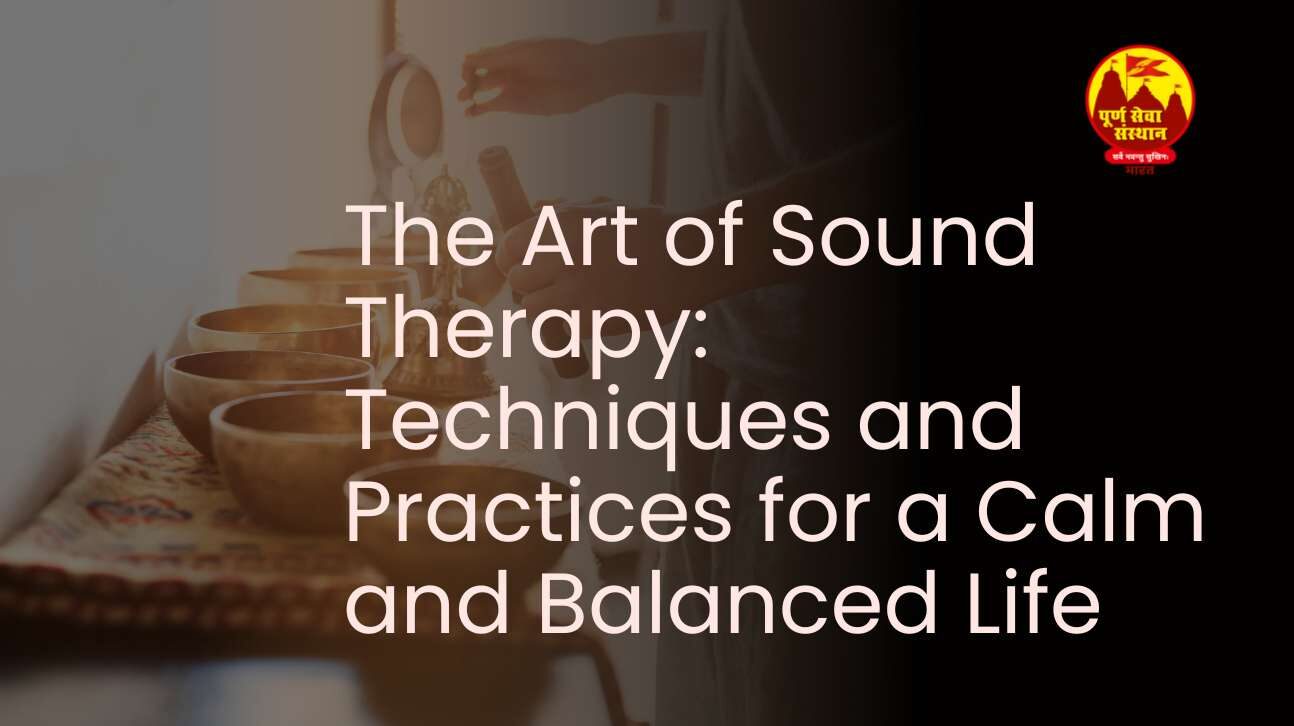
The Art of Sound Therapy: Techniques and Practices for a Calm and Balanced Life
Sound Therapy is the use of sound vibrations to heal the body, mind, and spirit. In Hinduism, sound therapy has been used for thousands of years as a powerful tool to balance and harmonize the body, mind, and spirit. Hinduism has a rich tradition of sound therapy practices, including mantras, music therapy, and yoga with sound. In this blog, we will explore the various techniques and practices of sound therapy in Hinduism, their benefits, and their significance in modern times.
Techniques of Sound Therapy in Hinduism
Mantras
Mantra is a Sanskrit word that means “a sacred utterance.” Mantras are ancient Hindu hymns or prayers that are chanted or recited to achieve a specific purpose. The repetition of a mantra helps to focus the mind and quiet the thoughts, leading to a state of deep relaxation and inner peace. Mantras are believed to have a powerful vibrational frequency that can affect the body, mind, and spirit.
The benefits of chanting mantras are numerous. It helps to reduce stress and anxiety, improve concentration and memory, and increase self-awareness. Some of the most popular mantras in Hinduism include the Gayatri Mantra, the Om Mantra, and the Mahamrityunjaya Mantra.
Music Therapy
Music therapy is a form of sound therapy that uses music to promote healing and relaxation. In Hinduism, music therapy is used in various forms, including bhajans, kirtans, and classical Indian music. The use of specific instruments, such as the sitar, tabla, and flute, creates a unique sound that helps to calm the mind and soothe the soul.
Music therapy has several benefits. It helps to reduce stress and anxiety, improve sleep quality, and reduce pain levels. It also promotes emotional well-being and enhances mood.
Yoga with Sound
Yoga with sound is a form of sound therapy that combines yoga postures with sound vibrations. In this practice, specific sounds or mantras are chanted during yoga poses, creating a unique vibrational frequency that helps to balance the body, mind, and spirit. Yoga with sound is believed to promote inner peace, relaxation, and spiritual growth.
There are several types of yoga with sound in Hinduism, including Kundalini Yoga, Nada Yoga, and Bhakti Yoga. Each type of yoga focuses on different aspects of sound therapy, such as breathwork, chanting, and music.
Practices of Sound Therapy in Hinduism
Meditation
Meditation is a practice that involves focusing the mind on a specific thought, object, or activity to achieve a state of deep relaxation and inner peace. In Hinduism, sound meditation is a powerful tool for achieving this state of mind. Sound meditation involves focusing on a specific sound, such as a mantra or the sound of a bell, to quiet the mind and achieve a state of deep relaxation.
Sound meditation has several benefits. It helps to reduce stress and anxiety, improve sleep quality, and promote emotional well-being. It also helps to improve focus and concentration and enhances self-awareness.
Puja
Puja is a Hindu ritual that involves offering prayers and worships to a deity or a sacred object. In puja, sound therapy is used in the form of mantras and chants to invoke the presence of the deity and to create a sacred space. Puja is believed to promote spiritual growth and connect the worshipper with the divine.
The benefits of puja include promoting inner peace, reducing stress levels, and enhancing spiritual connection. It also helps to improve focus and concentration and promotes a sense of well-being.
Yagna
Yagna is a Hindu ritual that involves the offering of sacrifices to the gods in a sacred fire. In yagna, sound therapy is used in the form of chanting mantras and hymns to invoke the presence of the gods and to create a powerful vibrational frequency that helps to purify the environment and the worshippers. Yagna is believed to promote spiritual growth, connect the worshippers with the divine, and purify their thoughts and actions.
The benefits of yagna include promoting inner peace, reducing stress levels, and enhancing spiritual connection. It also helps to purify the environment and promote a sense of well-being.
Significance of Sound Therapy in Modern Times
In modern times, sound therapy has gained popularity as a powerful tool for reducing stress and promoting emotional well-being. The use of sound therapy in various forms, such as music therapy, sound meditation, and yoga with sound, has been shown to have several benefits, including reducing stress and anxiety, improving sleep quality, and enhancing emotional well-being.
Sound therapy has also been shown to have a positive impact on physical health. Studies have shown that sound therapy can reduce pain levels, lower blood pressure, and improve the immune system.
Conclusion
In conclusion, sound therapy is an ancient practice that has been used in Hinduism for thousands of years to promote balance and harmony in the body, mind, and spirit. The use of sound therapy techniques, such as mantras, music therapy, and yoga with sound, can have numerous benefits, including reducing stress and anxiety, improving sleep quality, and promoting emotional well-being. The practices of sound therapy, such as meditation, puja, and yagna, can promote spiritual growth and connect the worshippers with the divine. In modern times, sound therapy has gained popularity as a powerful tool for promoting overall health and well-being.
Acharya Srikant Maharaj
Acharya Srikant Maharaj, the founder of Poornseva Sansthan, is an expert in sound therapy and has dedicated his life to promoting its use for the betterment of humanity. With his extensive knowledge of Hinduism and sound therapy, he has developed innovative techniques to promote physical, emotional, and spiritual well-being. His work has been widely recognized, and he continues to inspire and guide people toward a calm and balanced life through the art of sound therapy.